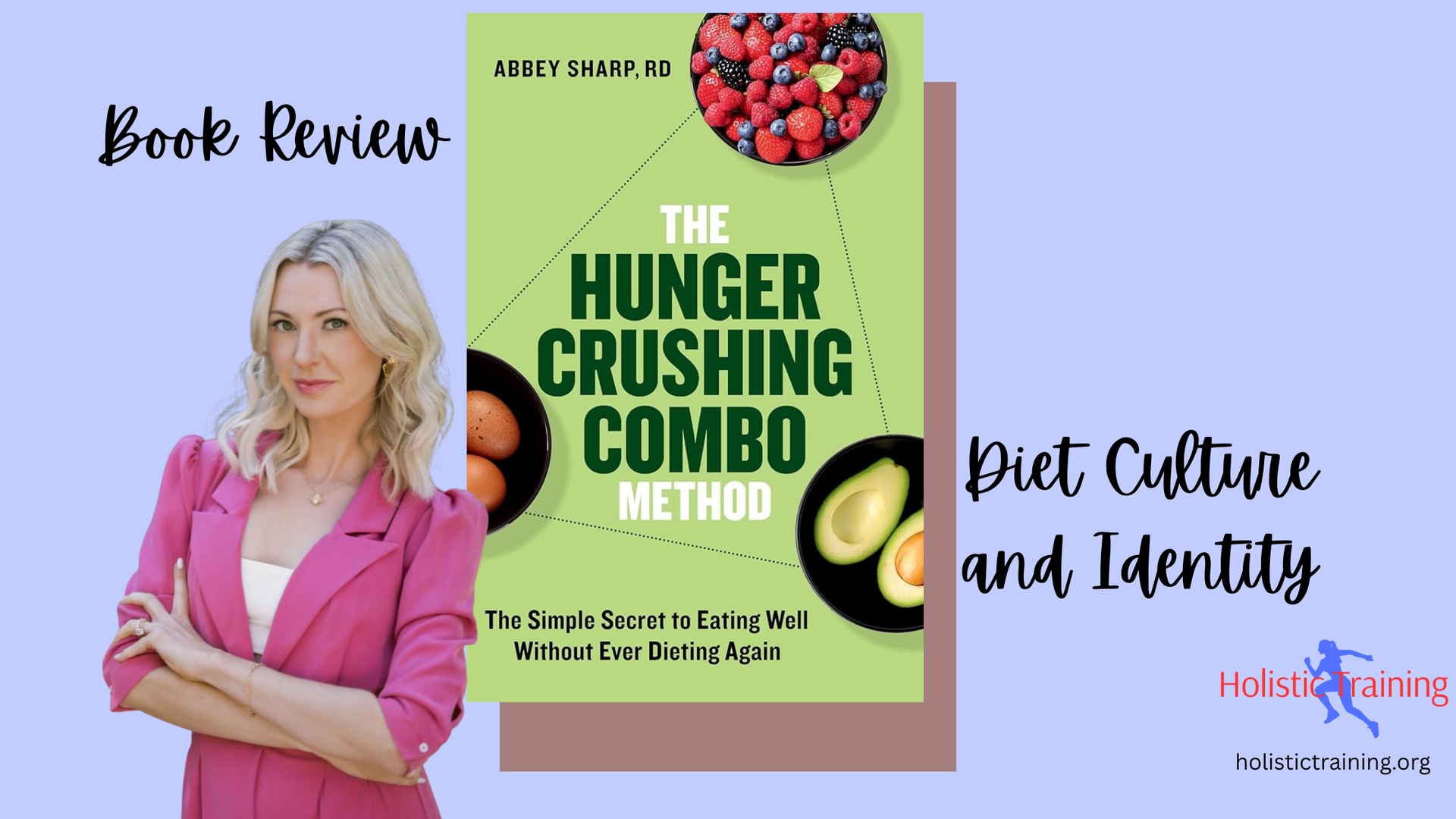

The Hunger Crushing Combo Method Review: Why Restrictive Diets Fail (Part 2)
A Critical Review of Part 1
This post discusses diet culture, disordered eating, and eating disorders. If you or someone you know is struggling, please know that support is available. You can reach the National Alliance for Eating Disorders helpline at 1-866-662-1235, or visit EatingDisorderHope.com for additional resources.
Summary
This is Part 2 of a Holistic Training book review series examining Abbey Sharp's The Hunger Crushing Combo Method. Sharp argues that diet culture — and its successor, wellness culture — has failed people by tying self-worth to body size and creating a binge-restrict psychological cycle. Her framework centers on three "Hunger Crushing Compounds" (protein, fiber, and healthy fats) that enhance satiety and satisfaction through addition rather than restriction, deliberately avoiding the moralistic food hierarchy that drives diet culture's harm. The review assesses Sharp's scientific claims rigorously, finding her physiological core — metabolic adaptation, hormonal responses to restriction, satiety mechanisms — well-supported by the literature, while flagging a compromised citation (Wansink), imprecise use of set-point theory, and thinner sourcing in some behavioral psychology sections. Sharp's positioning relative to Intuitive Eating and Health at Every Size is handled with intellectual honesty, and the review credits her central conceptual contribution — that nutritional difference does not require moral hierarchy — as doing genuine therapeutic work for people harmed by diet culture, while noting the framework's accessibility limitations and its best fit for those with stable food access who aren't ready to fully release weight-related goals.
Welcome Back to the Holistic Training Book Review Series
If you’re just joining us, this is Part 2 of our ongoing series reviewing Abbey Sharp’s The Hunger Crushing Combo Method. In Part 1, we introduced Sharp and gave an overview of what the book sets out to do.
In this installment, we’re going deeper into the actual content of Part 1 of Sharp’s book, which spans five chapters and lays out the philosophical, scientific, and psychological foundations of her framework. We’ll cover what the Hunger Crushing Combo Method actually is, the science Sharp uses to explain why conventional diets fail, and how she positions her approach within the broader antidiet landscape. We’ll also be doing something we take seriously here at Holistic Training: asking whether the science holds up.
Sharp is a registered dietitian with a significant public platform, and she makes substantive claims about nutrition science and eating behavior. We think her audience and ours deserve a review that engages those claims rigorously rather than one that simply summarizes or endorses. That’s what we’re here to do.
Let’s get into it.
Who Is Abbey Sharp, and What Is She Trying to Solve?
Abbey Sharp is a registered dietitian, author, and content creator whose work sits at the intersection of nutrition science and eating psychology. Her book, The Hunger Crushing Combo Method, opens with a diagnosis most of her readers will recognize immediately: diet culture has failed us. Not because we failed to follow it correctly, but because it was built on premises that work against basic human psychology and physiology.
Sharp’s target is specific. Diet culture, she argues, doesn’t just give us bad advice about food. It ties our self-worth to our body size and our moral value to our ability to follow its rules. The result is a population of chronic dieters who oscillate between restriction and binging, feel guilty for eating foods they enjoy, and whose mental real estate is increasingly occupied by food obsession rather than the things that actually make life worth living.
What makes Sharp’s diagnosis particularly compelling is her argument that diet culture hasn’t disappeared. It has evolved into wellness culture, which presents itself as the enlightened alternative but is, in Sharp’s words, “a slightly more sexy (and sneaky) new form” of the same thing. The language is gentler, and the aesthetic is cleaner, but the underlying logic remains largely intact: your body is a problem to be managed, and managing it correctly is a marker of your worth.
This distinction between diet culture and wellness culture matters. Diet culture is the older, more overt form: calorie counting, forbidden foods, before-and-after photos, and the scale as arbiter of success. Wellness culture is its contemporary evolution: “clean eating,” functional foods, gut health protocols, and the language of self-optimization. Sharp argues that recognizing wellness culture as diet culture’s successor rather than its cure is essential to understanding why so many people remain trapped despite having “left dieting behind.”
This framing sets up everything that follows. Sharp isn’t just offering a better diet. She’s proposing a fundamentally different relationship with food, one that starts by dismantling the assumption that food is a moral domain at all.
A note on language: Sharp uses clinical terms, including “overweight” and “obese,” throughout the book. She acknowledges that these terms carry real concerns but explains that she will use the language of the scientific literature rather than avoid it. We follow the same practice in this review for the same reason.
What Is the HCC Method?
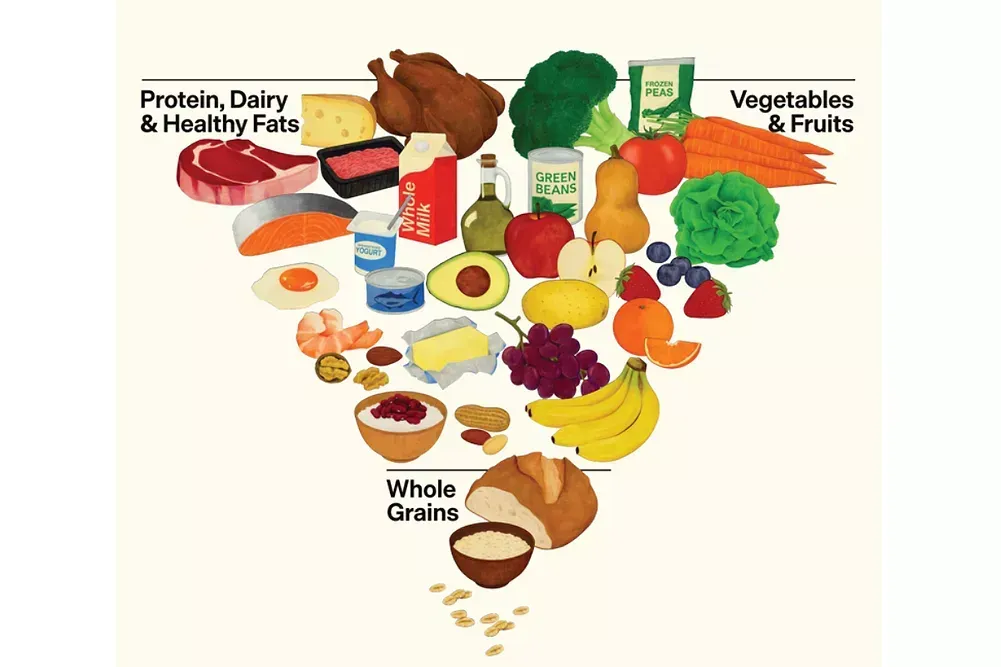
At the heart of Sharp’s book is a deceptively simple idea: instead of taking foods away, add foods that work for you. The Hunger Crushing Combo Method is built around three nutritional compounds that Sharp calls the Hunger Crushing Compounds: protein, fiber, and healthy fats. She argues these are the most powerful tools we have for achieving physical satiety and emotional satisfaction from food.
A quick clarification that Sharp makes early: the HCCs are not synonymous with macronutrients. Protein is a macronutrient, but fiber is a specific type of carbohydrate, and not all carbohydrates qualify. Not all fats are HCCs either. Trans fats are excluded entirely, and whether saturated fat qualifies depends on its food source rather than its chemical structure. Whole food sources of saturated fat, such as dairy, meat, and nuts, come packaged with protein and fiber, earning what Sharp calls “dual citizenship” in the HCC framework. Processed sources don’t.
Each compound contributes something distinct. Protein is the satiety superstar: it triggers the release of appetite-suppressing hormones, has a high thermic effect, and supports muscle mass and metabolic health. For a deeper dive into proteins’ mechanisms and food sources, see our dedicated post [here]. Fiber provides bulk, slows digestion, feeds the gut microbiome, and keeps you fuller longer. More on fiber specifically [here]. Healthy fats round out the trio by supporting vitamin absorption, cell function, and the hedonic dimension of eating. Fat makes food taste good, and Sharp argues that food without it will always leave a degree of longing even if it’s otherwise nutritious.
The additive logic is where the method’s psychological power lives. Rather than asking what you need to remove from your diet, the HCC framework asks what you can add to make your meals more satisfying. Dress up a bowl of pasta with olive oil, grilled chicken, and vegetables. Add nut butter to your morning toast. Pair your afternoon snack with a protein source. The goal is enhancement rather than restriction, and in doing so, Sharp argues, you naturally crowd out less satiating foods without the psychological cost of prohibition.
Non-fiber carbohydrates, what Sharp calls “naked carbs,” are not HCCs, but they are not forbidden either. The framework doesn’t ask you to avoid refined carbohydrates. It asks you to add HCCs alongside them, which increases satiety and reduces the likelihood of overconsumption. This is a meaningful distinction: the problem with refined carbs isn’t their presence on your plate but their tendency to dominate it at the expense of more satiating foods.
Underlying all of this is a principle that Sharp returns to repeatedly: moral neutrality toward food. Foods are not good or bad, virtuous or sinful. They differ nutritionally, and that is an objective fact, but nutritional differences do not require moral hierarchy. This distinction does real work in freeing people from the guilt-shame-restrict cycle that diet culture depends on, and we’ll return to it when we discuss Chapter 5.
Sharp positions the HCC Method within the broader antidiet landscape, specifically in relation to Intuitive Eating (IE), the evidence-based framework developed by Evelyn Tribole and Elyse Resch. The two share meaningful common ground: both are additive and non-restrictive in orientation, both reject external dietary rules in favor of bodily attunement, and both prioritize food freedom as an outcome. But IE explicitly rejects intentional weight loss as a goal, as it is architecturally incompatible with the framework’s internal logic. The HCC Method does not carry that constraint. It can be adapted to a range of goals, including weight loss, approached from what Sharp calls “a place of self-care that feels good” rather than deprivation. We’ll look more closely at this distinction when we reach Chapter 5.
Why Diets Fail: The Science That Sharp Presents
Sharp dedicates the bulk of Part 1 to a question most diet books never seriously ask: why do diets fail so reliably, for so many people, despite genuine effort? Her answer operates on three levels: physiological, psychological, and sociocultural. The science here is largely solid, with a few places where precision matters.
The physiology of failure
The most persistent myth in diet culture is the 3,500 calorie rule: the idea that a sustained weekly deficit of 3,500 calories will reliably produce one pound of weight loss, indefinitely. Sharp correctly identifies this as an oversimplification, citing Thomas et al. (2013), whose mathematical modeling demonstrated that this linear relationship breaks down over time due to metabolic adaptation. As the body loses weight, it adjusts by reducing energy expenditure to match the smaller body it now has to maintain. This is not a malfunction. It is physiology working exactly as designed.
Part of this adaptation involves non-exercise activity thermogenesis, or NEAT: the energy expended through all the movement that isn’t structured exercise, including fidgeting, standing, and walking to the kitchen. During caloric restriction, the body unconsciously reduces NEAT to conserve energy, meaning you burn fewer calories through spontaneous movement without necessarily realizing it. Sharp’s broader point that metabolic adaptation involves both resting metabolism and spontaneous activity is well-supported in the literature, including Rosenbaum et al. (2008).
Compounding these metabolic shifts is a hormonal one. During caloric restriction, hunger hormones like ghrelin increase, signaling the brain more insistently to seek food, while satiety hormones, including leptin, peptide YY, GLP-1, and cholecystokinin, decrease, meaning the signals that tell you you’re full become quieter. The body is not passively accepting the deficit. It is actively working to close it.
Sharp also addresses set-point theory, the idea that the body defends a preferred weight range rather than a fixed number.
A careful note here: the original strong version of set-point theory, which proposed a precisely defended fixed weight, is considered oversimplified in current research. The more scientifically current framing involves a defended range that can shift over time in response to environmental factors, sometimes called settling point theory. Sharp uses the phrase “weight range,” which is more consistent with current thinking, though attributing it to set-point theory by name is slightly imprecise. The underlying point, that bodies resist moving far outside their accustomed range, is well-supported.
The psychology of failure
The physiological case is compelling on its own, but Sharp’s psychological analysis is where the argument becomes most practically relevant for most readers.
The binge-restrict cycle is the central mechanism: restriction produces obsessive food preoccupation, which builds until it overwhelms compliance, producing a binge, which produces guilt, which produces tighter restriction, and repeat. Sharp’s formulation “binge, restrict, repent, repeat” is rhetorically effective and directionally accurate. The underlying mechanism is consistent with decades of research on dietary restraint, including Herman and Polivy’s foundational restraint theory and Wegner’s ironic process theory, which demonstrated that trying not to think about something reliably amplifies preoccupation with it. It is worth noting that this subsection arrives without citations, a gap in a section that sits at the core of Sharp’s argument.
Sharp also addresses last supper syndrome, the pre-diet binge driven by anticipated restriction, citing Memon et al. (2020). The phenomenon is real and well-documented in the behavioral literature. The source, published in Cureus, is a lower-tier open-access journal, which means this specific citation carries less evidentiary weight than a stronger source would. The phenomenon itself, however, is supported by the broader literature on anticipatory disinhibition.
The health halo effect, the tendency to overestimate how much of a “healthy” labeled food you can eat, is a genuine and well-documented phenomenon in consumer psychology. Sharp cites Wansink and Chandon (2006) here, and we want to flag this directly: Brian Wansink, one of that paper’s authors, resigned from Cornell University in 2018 following findings of research misconduct across multiple studies. Sharp’s underlying point is legitimate and supported by independent research. Studies by Schuldt and Schwarz (2010) on organic health labeling and Geyskens and colleagues (2008) on low-fat food associations, for example, both confirm that health-related labels reliably lead consumers to underestimate caloric content and increase consumption quantity. The health halo phenomenon is real; the Wansink citation is simply not the right source for it.
The sociocultural layer
Sharp’s sociocultural analysis, which addresses wellness culture as diet culture’s successor, health halos as deliberate marketing manipulation, and the systematic erasure of social determinants of health, is largely observational rather than empirical and carries fewer citations as a result. This is appropriate for claims that are primarily sociological and normative rather than scientific. These observations are credible and consistent with the broader critical wellness literature.
Sharp closes this section with what is perhaps her most important normative claim: diet failure is not a character failure. “It’s not because you are weak, or lazy, or have poor willpower,” she writes. “It’s because the diet has pushed against everything that makes you human, and your body is fighting back.” This is the framing the entire scientific section has been building toward, and it lands with the weight of everything that preceded it.
Does the Science Hold Up?
Across Part 1, Sharp makes claims that range from textbook physiology to contested behavioral science to sociological observation. Assessing them carefully requires distinguishing between these registers, and between the quality of a citation and the validity of the claim it supports. With that distinction in mind, the short answer is: largely yes, with important qualifications.
Where Sharp is on solid ground
The physiological core of Sharp’s argument is well-supported by the broader scientific literature. Protein’s satiety effects are among the most robustly replicated findings in nutrition science. Fiber’s role in promoting fullness, slowing digestion, and supporting gut health is well-established. The metabolic adaptation research she draws on, particularly Thomas et al. (2013)1 and Fothergill et al. (2016),5 is legitimate and directly relevant to her claims. The hunger and satiety hormone picture she describes is accurate and consistent with established appetite physiology.
The psychological phenomena she identifies, including the binge-restrict cycle, last supper syndrome, and the satisfaction hunt, are real and consistent with the behavioral and restraint theory literature, even where specific citations are thinner than we’d like. The broader literature supports these phenomena as genuine tendencies, which is sufficient for a practical book making clinical recommendations.
Sharp’s positioning of HCC relative to IE is accurate and intellectually honest. Her acknowledgment that HCC is not IE, her transparent treatment of their overlaps and differences, and her explicit statement that HCC is not a weight loss diet while remaining adaptable to weight loss goals all reflect careful thinking about how her framework sits in a crowded field.
Where more precision is warranted
A few specific points deserve closer attention from a scientifically literate reader.
Set-point theory, which Sharp invokes to explain the body’s resistance to sustained weight change, is a somewhat outdated framing. Current research tends toward a settling point or dual intervention point model, one that posits a defended weight range rather than a fixed point and acknowledges that range can shift over time. Sharp does use the phrase “weight range,” which is more consistent with current thinking, but attributing it to set-point theory by name is slightly imprecise.
Sharp’s citation practice is generally above average for the popular wellness genre. She uses real peer-reviewed literature throughout. However, we identified a recurring pattern in which citations are sometimes narrower in scope than the claims they are enlisted to support, and a small number of citations are weaker than the claims warrant. The most significant of these is the use of Wansink and Chandon (2006)4 to support the health halo effect. Brian Wansink’s research has been subject to serious credibility concerns following a misconduct investigation. The health halo phenomenon is well-supported by other independent research, and Sharp’s underlying point stands, but this particular citation should give careful readers pause.
It is important to say clearly: a weaker citation does not mean a weaker claim. We assessed Sharp’s claims against the broader literature independently of her specific sources, and the large majority hold up well. The citation concerns are about precision and source quality rather than the validity of her core argument.
The bottom line
Sharp’s scientific case is stronger than most books in this genre, and her core claims hold up well when assessed against the broader literature. She has done real homework, and it shows. The citation concerns we’ve identified don’t undermine her argument; they are the kinds of imprecisions that a rigorous reader should be aware of rather than reasons to dismiss the book. Read with that awareness, The Hunger Crushing Combo Method is a serious and credible contribution to the nutrition and wellness conversation.
Healing Your Relationship with Food
The final chapter of Part 1 is where Sharp shifts from the scientific and psychological case for her framework to the practical and philosophical question of how to actually live it. Chapter 5 covers the anti-diet landscape Sharp is working within, how the HCC Method relates to the frameworks that came before it, and what food freedom looks like as a lived outcome.
The antidiet landscape
Sharp gives a fair and reasonably accurate overview of three movements that have shaped the conversation around non-restrictive eating: body positivity, Health at Every Size, and IE.
Body positivity, rooted in fat liberation, was designed to challenge traditional beauty standards and advocate for the dignity and worth of all bodies regardless of size, shape, or ability. Sharp acknowledges both its significance and its limitations: the movement has become increasingly commercialized and exclusionary, often centering smaller, more conventionally acceptable bodies even within its ostensibly inclusive framework. Body neutrality has emerged as a more sustainable alternative for many people, offering the idea that you can respect and care for your body without being required to love it on any given day.
Health at Every Size (HAES), which originated in the 1990s, sought to shift the clinical focus away from weight and BMI toward health behaviors, weight stigma reduction, and more inclusive care. Sharp engages its strengths honestly and notes its criticisms: the framework is sometimes misread as claiming that health outcomes are identical across all body sizes, it has been criticized for inadequately addressing the systemic inequalities it identifies, and, like body positivity, it has tended to center smaller, white, able-bodied people despite its broader stated aims. One gap worth noting: Sharp engages IE’s research base in substantive detail but gives less attention to HAES’s growing research base, which includes meaningful evidence for improvements in health behaviors, psychological well-being, and metabolic markers independent of weight change. Given Sharp’s evident care in representing these frameworks fairly, this is likely an omission of emphasis rather than intent, but it is worth flagging for readers who want a fuller picture of HAES’s evidentiary standing.
IE receives the most substantive engagement. Sharp cites Linardon et al. (2021),6 a meta-analysis covering over 125 studies, to establish IE’s evidence base, one of her stronger citations in the book. She is careful to note that IE is not a weight loss framework, that it has been co-opted and distorted in popular discourse, and that it assumes levels of body awareness and privilege not universally accessible. As established earlier, HCC and IE share meaningful common ground while occupying distinct positions in the antidiet landscape. Sharp handles this distinction with care throughout Chapter 5.
Food freedom as the goal
Sharp’s vision of the HCC Method’s end state is food freedom: the condition in which food no longer occupies the center of your psychological life, dietary compliance is no longer a marker of your worth, and eating becomes, in her words, “as intuitive as brushing your teeth.”
The practical tools Sharp offers toward this end, including the hunger-fullness scale, mid-meal check-ins, reducing distractions during eating, and journaling, are consistent with the mindful eating literature and sensible in practice. The hunger-fullness scale that Sharp recommends as a practical tool originates with Tribole and Resch’s IE framework. A brief attribution note would have been consistent with Sharp’s careful earlier acknowledgment that HCC is not IE, though the omission does not diminish the tool’s practical value.
Sharp also emphasizes self-compassion as the affective foundation of the whole enterprise. Rigidity is the enemy, she argues, and self-compassion is what prevents the HCC framework from becoming another set of diet culture rules in disguise. This is one of the book’s more psychologically sophisticated contributions, and research on self-compassion in behavior change supports the intuition.
The book’s strongest conceptual contribution lands here: foods are not morally equal because they are nutritionally identical. They are not. Some are higher in protein, fiber, and healthy fats than others, and that matters practically. But nutritional difference does not require moral hierarchy. A less nutrient-dense meal is not a moral failure. It is just a meal. This distinction, held consistently, does meaningful work in dismantling the guilt-shame architecture that diet culture depends on.
Overall Assessment
Abbey Sharp set out to write a book that offers people a genuine alternative to the diet and wellness culture that has failed them. On that measure, The Hunger Crushing Combo Method largely succeeds, and it succeeds in ways that matter.
The HCC Method is coherent, practically grounded, and built from nutritional components that are genuinely well-supported in the scientific literature. Sharp’s multilevel argument, spanning the physiological, psychological, and sociocultural dimensions of diet failure, holds together across Part 1 with more rigor than the popular wellness genre typically demands of itself. Her intellectual honesty about GLP-1 medications as a faster-acting alternative, her careful positioning of HCC relative to IE, and her consistent refusal to shame readers for their goals or histories all reflect the work of a practitioner who takes her audience seriously.
The book’s most valuable conceptual contribution is also its simplest: nutritional difference does not require moral hierarchy. Foods can differ in how much protein, fiber, and healthy fat they contain without one being virtuous and another being sinful. This distinction, held clearly and applied consistently, does real therapeutic work for anyone whose relationship with food has been shaped by diet culture’s moralistic logic.
Where the book falls short is largely a matter of precision rather than principle. Citation quality is uneven, and the most significant evidentiary gaps appear in the psychological subsections that carry the most weight for Sharp’s target audience. The Wansink citation is the most significant concern in a book that presents itself as evidence-based. Set-point theory is invoked in a form that current research has refined. And the framework’s accessibility limitations, specifically who has the food access, financial resources, and psychological safety to implement it, are not fully acknowledged despite Sharp’s acute awareness of these structural issues in other contexts.
None of these is a reason to dismiss the book. There are reasons to read it with the same critical engagement Sharp brings to diet culture itself.
Who this is for
The HCC Method is most likely to be valuable for people with histories of chronic dieting and diet culture harm who are ready to approach eating non-restrictively but aren’t prepared to fully release weight-related goals, and who have sufficient food access and stability to experiment with a new framework. For people navigating active eating disorders, significant food insecurity, or complex trauma histories, the HCC Method may be a useful eventual destination but is likely to require more support than a book alone can provide.
Coming up in Part 3
In our next installment, we’ll move into Part 2 of Sharp’s book, where she applies the HCC framework to specific goals and populations: weight loss, insulin resistance, diabetes and PCOS management, sports and fitness nutrition, perimenopause and menopause, and children’s eating. We’ll bring the same evidence-based, critically engaged approach we’ve applied here, and examine whether the framework holds up as it moves from general principles to specific clinical and demographic contexts.
As always, if anything in this review resonated with your own experience or if you have questions about how the HCC Method might apply to your specific situation, we’d love to hear from you.
Key Takeaways
- Diet culture has evolved into wellness culture, which Sharp argues is the same restrictive logic repackaged with cleaner aesthetics and gentler language — recognizing this distinction is foundational to her framework.
- The HCC Method is additive, not restrictive, built around three Hunger Crushing Compounds (protein, fiber, healthy fats) that increase satiety and satisfaction without prohibiting any foods.
- Diets fail for physiological reasons, not personal weakness — metabolic adaptation, NEAT reduction, and hormonal shifts in hunger/satiety signals actively work against sustained caloric deficits.
- The binge-restrict cycle is the central psychological mechanism of diet failure, driven by restriction-induced food preoccupation that builds until it overwhelms compliance.
- Nutritional difference does not require moral hierarchy — the book's core conceptual contribution is separating objective nutritional facts from the moral value judgments diet culture layers onto food.
- The science largely holds up, with the physiological claims being the most robustly supported; the main citation concerns are a compromised Wansink source and slightly imprecise use of set-point theory.
- HCC differs from Intuitive Eating primarily in that it remains adaptable to weight loss goals, whereas IE is architecturally incompatible with intentional weight loss as an objective.
- The framework has accessibility limitations that Sharp does not fully address — food access, financial resources, and psychological safety are prerequisites that not all readers will have.
Bibliography
Fothergill, E., Guo, J., Howard, L., Kerns, J. C., Knuth, N. D., Brychta, R., Chen, K. Y., Skarulis, M. C., Walter, M., Walter, P. J., & Hall, K. D. (2016). Persistent metabolic adaptation 6 years after “The Biggest Loser” competition. Obesity, 24(8), 1612–1619. https://doi.org/10.1002/oby.21538
Geyskens, K., Pandelaere, M., Dewitte, S., & Warlop, L. (2008). The backdoor to overconsumption: The effect of associating “low-fat” food with health references. Journal of Public Policy & Marketing, 27(2), 135–146.
Linardon, J., Tylka, T. L., & Fuller-Tyszkiewicz, M. (2021). Intuitive eating and its psychological correlates: A meta-analysis. International Journal of Eating Disorders, 54(7), 1073–1098. https://doi.org/10.1002/eat.23509
Memon, A. N., Gowda, A. S., Rallabhandi, B., Bidika, E., Fayyaz, H., Salib, M., & Cancarevic, I. (2020). Have our attempts to curb obesity done more harm than good? Cureus, 12(9), e10275. https://doi.org/10.7759/cureus.10275
Rosenbaum, M., Hirsch, J., Gallagher, D. A., & Leibel, R. L. (2008). Long-term persistence of adaptive thermogenesis in subjects who have maintained a reduced body weight. American Journal of Clinical Nutrition, 88(4), 906–912. https://doi.org/10.1093/ajcn/88.4.906
Schuldt, J. P., & Schwarz, N. (2010). The “organic” path to obesity? Organic claims influence calorie judgments and exercise recommendations. Judgment and Decision Making, 5(3), 144–150.
Sharp, A. (2026). The hunger crushing combo method. Hachette Book Group.
Thomas, D. M., Martin, C. K., Lettieri, S., Bredlau, C., Kaiser, K., Church, T., Bouchard, C., & Heymsfield, S. B. (2013). Can a weight loss of one pound a week be achieved with a 3500-kcal deficit? Commentary on a commonly accepted rule. International Journal of Obesity, 37(12), 1611–1613. https://doi.org/10.1038/ijo.2013.51
Wansink, B., & Chandon, P. (2006). Health halos: How nutrition claims influence food consumption for overweight and normal weight people. FASEB Journal, 20(5), A1008. https://doi.org/10.1096/fasebj.20.5.A1008-c